- /
- Advancing Medical Device Reprocessing: Challenges,...
- /
- Biofilms and Reusable Medical Devices...


Advancing Medical Device Reprocessing:
Challenges, Opportunities, Safety & Sustainability



Biofilms remain one of the most persistent and underestimated threats in the reprocessing of reusable medical devices. This webinar explains how biofilms form, why mature biofilms become highly resilient, and how they can survive routine cleaning and disinfection procedures. We will explore the specific device and workflow factors that promote biofilm development: especially moisture, residual soil, delayed cleaning, and complex, inaccessible design features. Participants will learn how biofilm risk differs across device categories, from standard surgical instruments to complex lumened devices such as flexible endoscopes. Real-world clinical implications will be discussed, and the potential for biofilm-associated transmission events. Finally, the session reviews anti-biofilm strategies and standardization approaches to strengthen patient safety

This section introduces biofilm as a mature, often multispecies microbial community that behaves differently from free-floating (planktonic) organisms. We will describe the extracellular polymeric substances (EPS) matrix—its composition and how it protects embedded microorganisms. The stages of formation (attachment, maturation, and dispersion) will be reviewed to highlight when biofilms are most vulnerable versus most resistant. Emphasis will be placed on the resilience of mature biofilms and how the biofilm lifestyle promotes microbial survival, persistence, and tolerance to reprocessing procedures.

Reusable medical devices can be intrinsically predisposed to biofilm formation due to environmental and process-related conditions. Key predisposing factors include moisture retention, residual soil, delayed cleaning, and complex or inaccessible design features (e.g., lumens, joints, valves). We will review the prevalence and operational relevance of different biofilm “states” encountered in reprocessing contexts: hydrated biofilm, dry-surface biofilm, and cyclic build-up biofilm. This topic clarifies how incomplete reprocessing procedures may lead to biofilm accumulation

Biofilm risk is not uniform across surgical devices—it strongly depends on device complexity and accessibility to cleaning. Standard surgical instruments generally present a lower risk of persistent biofilm when reprocessing is compliant, validated, and promptly performed. In contrast, complex and lumened surgical devices are more prone to retention of soil and moisture, creating favorable conditions for biofilm establishment and persistence. We will discuss how biofilm presence can complicate routine reprocessing outcomes. The session will translate these points into implications for inspection, verification, and reprocessing workflow design.
Flexible endoscopes represent the greatest biofilm challenge due to intricate internal channels, sensitive materials, and high bioburden exposure during use. We will examine why endoscope architecture and reprocessing complexity make consistent biofilm prevention and removal particularly difficult. The topic will address reported prevalence patterns of biofilm and contamination findings in patient-ready endoscopes, and why “clean-looking” does not equal “biofilm-free.” We will also review biofilm-associated transmission risk, including the context of MDRO outbreaks linked to endoscope-associated infection events. Finally, we will outline the reprocessing implications; especially around channel cleaning and drying, storage, verification testing, and risk-based surveillance.

This session frames anti-biofilm control around three aspects: “inactivation”, “removal”, and “inhibition of formation”. We will show why killing microbes is not enough when the EPS matrix protects embedded cells, and why “removal” (using chemical and/or mechanical action) is the operational foundation for removing biofilm and soils. We will then focus on “inhibiting re-growth” through drying, channel purge, storage conditions, and minimized delays. Finally, we will position the interest of automated systems (WDs, AERs, drying cabinets) and emerging technologies to reduce biofilm impact and standardization (training, validation, verification) to sustain performance.
This is the second webinar dedicated to “Biofilms and Reusable Medical Devices: Risks, Challenges, and Control Strategies”, presented by ASP Continuous Education.
24th & 25th June 2026
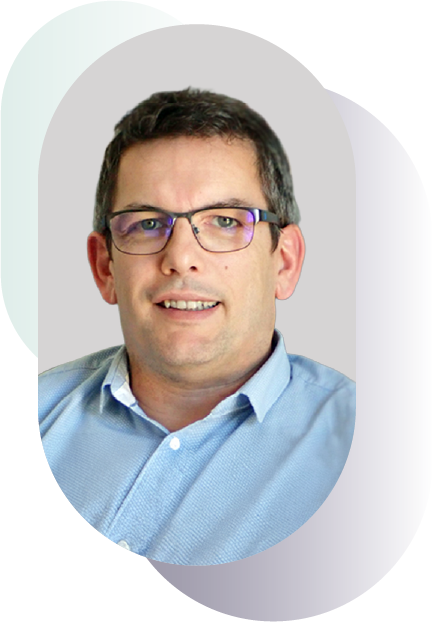
- PhD in Microbiology from École Nationale Polytechnique of Toulouse.
- Over 25 years of experience in healthcare hygiene and infection prevention.
- Co-founder of BIOTECH-GERMANDE and former leader of EUROFINS BIOTECH-GERMANDE.
- Currently serves as Scientific and Innovation Director at EUROFINS HOSPITAL HYGIENE.
- Active contributor to international standardization bodies (AFNOR, CEN, ISO, AAMI), supporting global standards in sterilization, biofilm control, UV disinfection, and medical device safety.
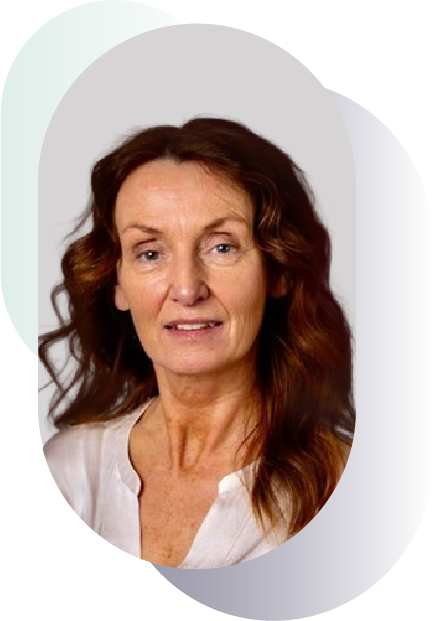
- Senior Lecturer in Medical Microbiology at Technological University Dublin and industry consultant in Medical Device Decontamination and Infection Prevention and Control
- Expertise in microbial transmission, pathogenicity, antimicrobial resistance, and healthcare-associated infections
- Over 30 years of experience across healthcare, education, and research
- Combines clinical practice and research to support evidence-informed training and best practices
- Works with industry partners on technology-focused research and safe decontamination initiatives